About this work
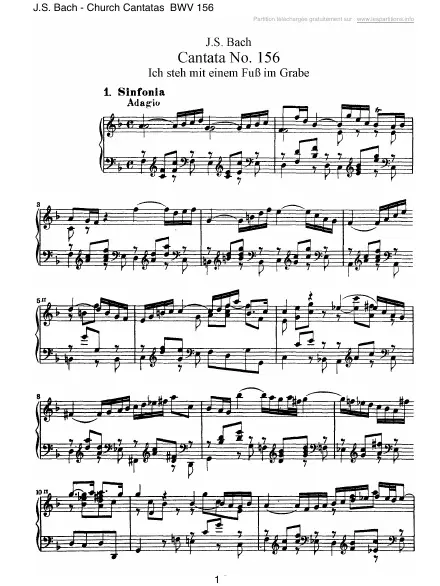
Cantata BWV 156 opens with a Sinfonia in which the oboe unfolds a calm line above the strings. This music, connected with a concerto movement, establishes a breath that the rest of the cantata should not lose. The tenor aria and soprano chorale then allow human anxiety and spiritual support to coexist.
In the Sinfonia, the soloist will benefit from shaping long arches instead of stressing every expressive note. The strings should support the pulse transparently and allow dissonances to resolve without haste. Rehearse the exchanges of breath with the continuo: it maintains the movement whenever the oboe suspends its phrase.
For the aria with chorale, first rehearse the two vocal planes separately. The tenor carries a mobile text; the soprano should remain simple and steady without becoming rigid. When combining them, hear where their consonants may interfere and adjust volume rather than diction. The contrast will remain clear while belonging to one pulse.
What the document containsCantata BWV 156 for soloists, choir, and orchestra;a 19-page PDF;no accompanying MIDI file.The score includes the Sinfonia, the vocal movements, and the concluding chorale.