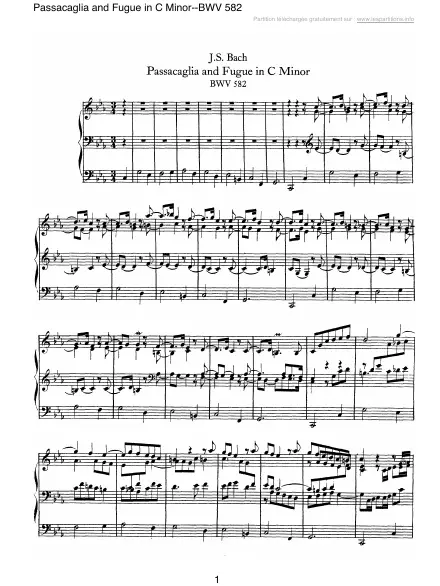
About this work
The Passacaglia and Fugue in C minor, BWV 582, grows from an ostinato bass that returns while constantly changing its function. At times a foundation and at others a line within the counterpoint, it supports an accumulating sequence of variations until the music turns into a fugue. The scale comes less from volume than from the patient transformation of one idea.
Begin by playing the bass alone and singing the voices that will appear above it. In each variation, decide which line should guide the ear; they cannot all remain in the foreground. The pedalboard needs an even weight, while articulation on the manuals reveals imitation and changing density without disturbing the pulse.
At the entrance of the fugue, avoid making a completely new start. Its subject extends the energy built by the passacaglia and should emerge from its final surge. Save registration changes and power for genuinely decisive stages. The architecture then becomes audible: a long growth, a redistribution of voices, and a conclusion that has been earned rather than appended.
What the document containsthe Passacaglia and Fugue in C minor, BWV 582, for organ;a 13-page PDF;no accompanying MIDI file.The score brings together the ostinato-bass variations and the fugue that extends them.