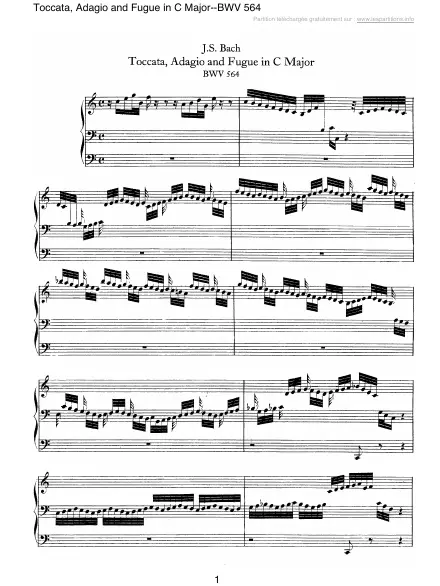
About this work
The Toccata, Adagio and Fugue, BWV 564, brings together three very different gestures. The toccata passes its runs between the hands and pedalboard with almost concerto-like freedom. The Adagio sets a melodic line above a regular accompaniment, then the fugue turns that energy into contrapuntal construction. The contrasts are as central to the triptych as its virtuosity.
In the toccata, group runs by direction and prepare changes of manual before the movement itself. The pedalboard should speak clearly without weighing down every arrival. For the Adagio, choose a registration that separates melody from accompaniment; the upper line needs room to breathe while the repeated notes remain steady.
The fugue demands a different kind of attention. Mark the subject entries, then check that the articulation of the secondary voices does not contradict their character. Leave enough silence between the three sections to enter a new sound world, but retain a shared tension. Three adjacent pieces are no substitute for an architecture.
What the document containsall three sections of BWV 564 for organ;a 14-page PDF;no accompanying MIDI file.The document presents the work for solo organ, with no transcription for another ensemble.