About this work
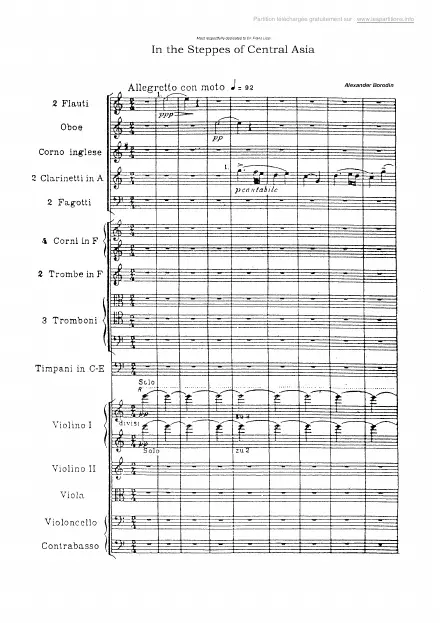
A single sustained note is enough to establish the horizon of In the Steppes of Central Asia. Above it, the clarinet introduces one melody; another theme, entrusted to the cor anglais, brings a different colour. Borodin gradually draws the two lines together until they overlap. The music tells its story less through action than through distance, approach and the retreat of instrumental colours.
When rehearsing this orchestral picture, keep the bed of sound genuinely discreet. The sustained strings are not a neutral background: they define the silence around the solos. Clarinet and cor anglais can prepare their phrases as two independent narratives, then check that their breathing remains compatible when the themes meet.
The ensemble challenge lies in the long dynamic spans. A crescendo that comes too quickly destroys the impression of movement; a static sound without direction brings the piece to a halt. Mark the points of departure, convergence and withdrawal in the score. Borodin’s fairly transparent orchestration then becomes a landscape without any need to thicken the sound continually.
What the document containsthe symphonic picture composed in 1880 and dedicated to Franz Liszt;a 24-page orchestral score;no accompanying MIDI file.The PDF contains the orchestral score and is distinct from the piano reductions published elsewhere.