Free sheet music
Ballade Op. 10 n°1 en Ré mineur
About this work
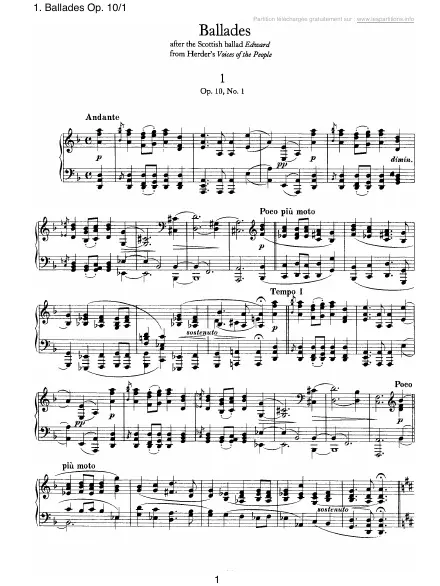
Brahms does not tell the First Ballade of Op. 10 through theatrical effects. Its point of departure is Edward, an old Scottish ballad whose dialogue gradually reveals a murder. In the opening Andante, the chords move like questions answered by the bass. Their gravity comes from rhythm and silence, not from keeping the sound heavy throughout.
The Allegro non troppo changes the scale of the narrative. The pulse tightens, triplets set the texture in motion, and repeated chords become more urgent. Keep a connection with the opening, however. If this section merely accelerates without a steady underlying beat, the return of Tempo I will sound attached rather than inevitable.
Practise the bass line on its own to hear its direction, then restore the upper chords while giving each note a different weight. In the quicker passages, find the harmonic outline before seeking brilliance and evenness. The pedal can join resonances, but it needs frequent renewal if each change of harmony is to remain clear.
When the Andante returns, avoid simply reproducing the opening sound. The central episode has changed the listener’s perspective: the same tempo can now carry more tension through restraint rather than additional volume.
What the document containsDocument: three pages for solo piano, covering 73 measures, with a listening MIDI.The engraving comes from ScoreBase and the PDMX corpus under CC0 1.0. After matching it to the former catalogue edition, LesPartitions.info reviewed every page and checked the audio rendering.