About this work
The first Hungarian Dance opens the collection with an Allegro molto in G minor. Brahms draws on a melody associated with Miska Borzó’s Isteni csárdás, then reshapes it through displaced accents, sudden surges and more restrained replies. In the four-hand version the phrase structure remains clear, yet its energy comes from inflection within the pulse rather than unvarying speed.
Across 167 bars, the strongly rhythmic opening is set against molto sostenuto and sotto voce passages. The secondo supplies basses, chords and renewed impetus; the primo carries the line, octaves and runs across the keyboard. Several returns reuse the same material in a different dynamic or register. Inner voices therefore need space instead of being covered by the upper part.
Secure repeats and changes of character with one shared beat. Practise the secondo chords without pedal, then add the primo after deciding who gives each entry. Poco ritardando markings must be prepared together and recover the tempo immediately. In the sustained section, reduce weight without allowing the dance to stall; the contrast then becomes expressive while the larger structure stays intact.
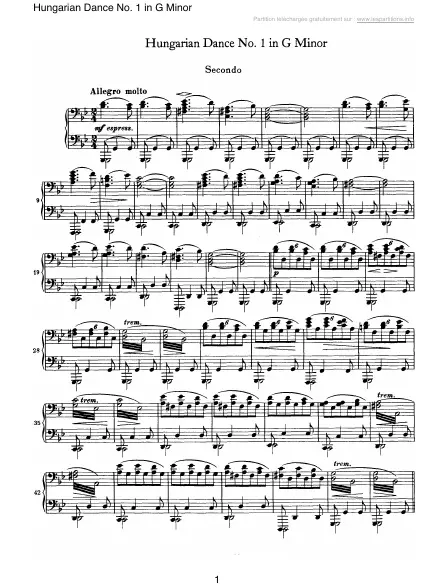
What the document containsDocument: The document contains 8 pages in PDF format. No MIDI file is currently attached to this historical record. The eight-page PDF contains separate primo and secondo parts, arranged in page pairs covering the same groups of bars; the reference catalogue counts 167 bars.The historical record marks the work and file as public domain but does not document the editor or exact provenance of this copy. The file preserved by LesPartitions.info can be compared with the reference catalogue. Following that check, LesPartitions.info separates established facts from information that remains incomplete.