About this work
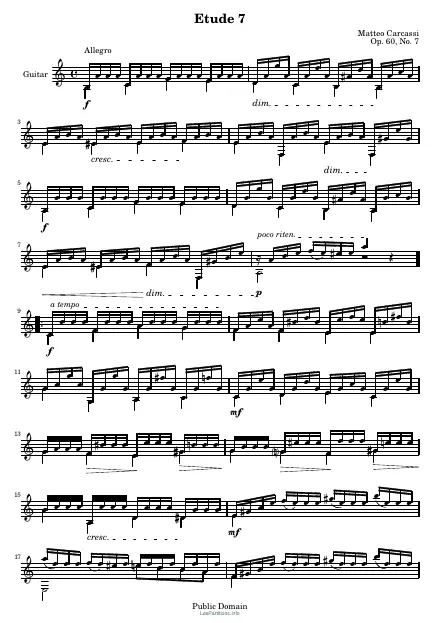
At the start of the study, three repeated upper notes follow the first bass note in Carcassi’s Étude op. 60 no. 7. The continuous motion can sound like a single fast line, but the pattern changes in the next bar. In these opening passages, the bass changes on every beat. It carries the harmony and shapes the course of each phrase.
A bass line beneath the repeated notes
Practise the thumb on its own. In passages where the bass changes on every beat, keep four steady beats in each bar; elsewhere, observe the written sustained notes. Then add the upper notes at a softer level. Their repeated pattern should reveal the changing bass; giving every attack the same weight soon makes the phrase sound like an engine.
The opening section ends with a sustained bass note and a short breath marked poco riten. Allow that relaxation before the a tempo return. Later, the repeated notes give way to a moving line. Keep the pulse through the changes of position and the short slurs.
Score and listeningThe PDF contains the complete solo guitar study in two pages. Jeff Covey’s engraving, distributed by the Mutopia Project and made with LilyPond, has been placed in the public domain by its typesetter. The MIDI plays the piece without the printed repeats.Original files and credits are available in the Mutopia entry. Explore more music at LesPartitions.info.