About this work
In Carcassi’s Study op. 60 no. 3, a melody emerges from an almost continuous arpeggio. The bass sustains its notes while the middle strings move, and a few upper notes trace a slower phrase. The challenge is to make all three layers audible without giving every attack the same weight.
Finding the melody inside the arpeggios
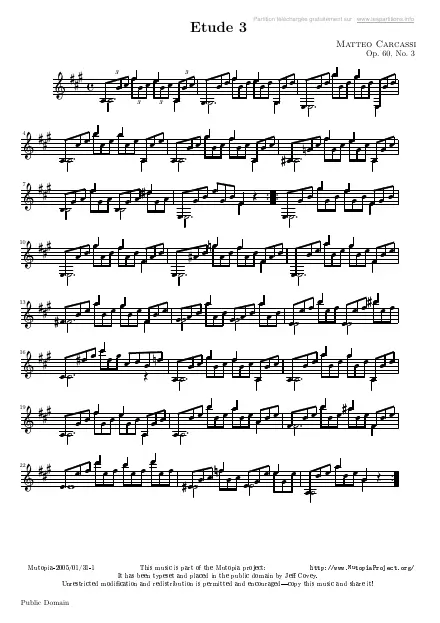
In bar 16, the first two beats use triplets, while the last two move into regular eighth notes. Keep a steady pulse through the change: three notes and then two must fit into the same beat. Play the upper line alone to hear its points of emphasis, then add the arpeggios with a lighter sound. The bass should remain present without covering the melody.
For the left hand, long notes require one finger to stay in place while the others move. Prepare each chord change while holding the bass for its written duration. The melody’s rests and the short pauses in the arpeggios clarify the ends of phrases; do not rush through them.
Score and listeningThe one-page PDF contains the complete piece for solo guitar. The engraving by Jeff Covey, distributed by the Mutopia Project, presents the three voices on a single staff. The MIDI provides a guide to pitches and rhythm; the score shows the durations, rests and repeats to practise.The engraver has placed this edition in the public domain. It was typeset with LilyPond. Find its credits in the Mutopia entry, and explore more scores at LesPartitions.info.