About this work
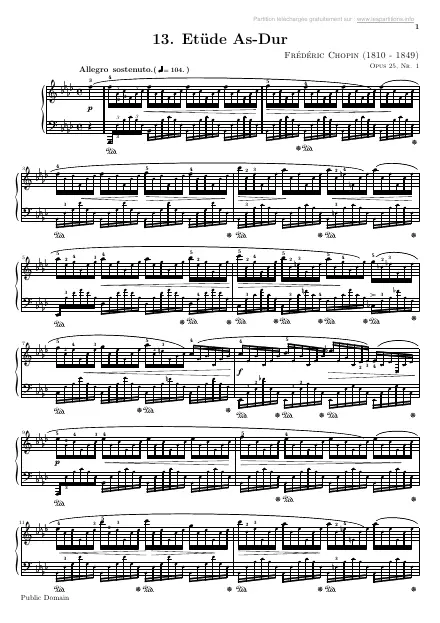
In the Étude Op. 25 No. 1, a melody rises above an almost continuous flow of arpeggios. The challenge is not to make a great many notes audible, but to keep them from concealing the melodic line. The harmony shifts beneath the fluid surface, and the melody’s points of emphasis must remain clear without jabs from the thumb or isolated accents.
Begin by practising the top note with the bass, leaving out the inner notes. This reveals the phrase and the changes of chord. Then restore the arpeggios at a low dynamic, using a lateral arm movement and a flexible wrist. Keep the fingers in contact with the keys; there is no need to lift each note like a tiny weight.
The pedal should follow the harmony, but it must not create the upper line’s legato artificially. Test the changes slowly, then listen for places where several chords blur together. In rising passages, aim for the arrival rather than every intermediate step. Continuity comes from a succession of clear directions, not from an even haze of sound.
What the document containsthe Étude in A-flat major, Op. 25 No. 1, for solo piano;a 4-page PDF;an accompanying MIDI file.The document preserves Chopin’s piano version; the MIDI is provided for listening and does not replace the score’s phrasing indications.