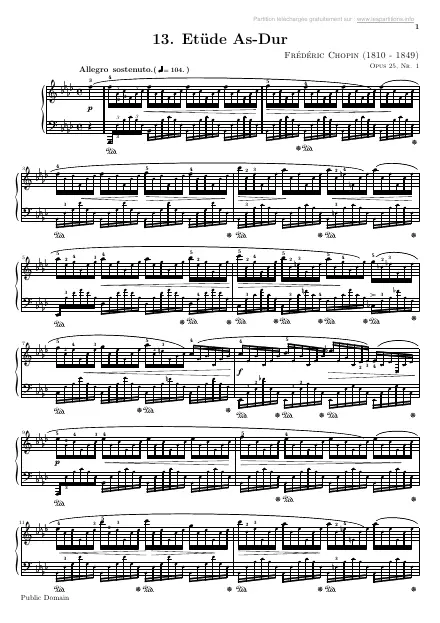
About this work
To discover the song within Étude Op. 25 No. 1, set aside its reputation as a virtuoso piece for a moment. The important voice lies at the outer edge of the right hand: it moves through long inflections while the remaining notes fill the harmony. Sing that line, then play it with the bass alone. This skeleton reveals breaths that the stream of notes can easily conceal.
When restoring the full texture, think in broad hand positions rather than independent fingers. Let the arm accompany each move, keep the hand close to the keyboard and make the inner notes light. One hard thumb attack can break the illusion. In ascending passages, choose a destination and grade the intensity towards it; each arpeggio does not need an accent of its own.
Pedal can connect the registers, provided that it is renewed with the chords. Listen particularly to the bass after every change; once it loses definition, the blend is already too generous. A moderate tempo first helps to establish those changes, after which speed can increase without hardening the tone. The desired balance remains a cantabile line carried by constantly moving material.
What the document containsthe complete work in A-flat major for solo piano;a 5-page PDF with the full notation;a MIDI file that helps locate the harmonic journey.LesPartitions.info provides this freely licensed edition of Chopin.