About this work
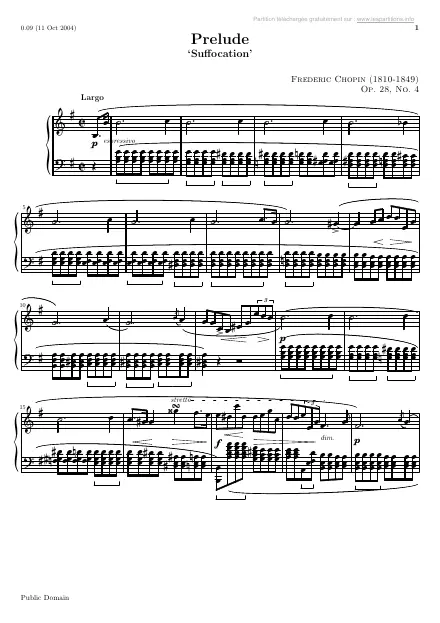
In the fourth Prelude of Op. 28, the left hand repeats chords that descend by small steps while the melody resists above them. Everything rests on this friction: the bass and harmony move forward, while the upper voice seems to hold time back. The piece is brief, but its journey amounts to more than a sad mood; each change of chord alters the tension of the phrase.
Play the upper line alone first and mark the notes towards which it is moving. Add the chords very quietly, listening to their progression rather than to each one as a vertical block. If every chord carries the same weight, the accompaniment becomes a row of obstacles. Instead, release the hand after each attack and keep the pulse alive beneath its breaths.
The central crescendo should grow from the harmony and density, not from a sudden change of touch. Save the fullest sound for the true climax, then let the final cadence lose energy without becoming slack. The pedal can connect the resonances, but it must change with the bass. A useful test is to play very slowly without pedal: if the direction remains audible, the later rubato will have something to support.
What the document containsThe Prelude in E minor, Op. 28 No. 4, for solo piano.One 2-page PDF score.One MIDI file for practice.This is Prelude No. 4 alone, not the complete collection.