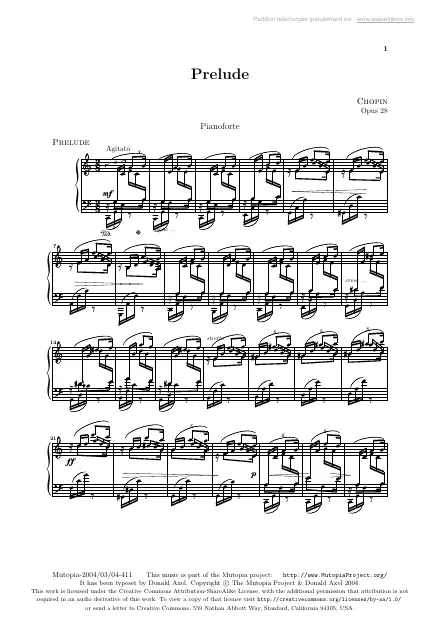
About this work
Prelude Op. 28 No. 1 needs only a few seconds to move from clarity into tension and back towards repose. Its writing layers bass notes, chordal material and melodic peaks. To understand that motion, reduce each group to its lowest and highest note. Two answering trajectories can then be heard beneath the apparent agitation.
Next restore the inner voices while continuing to listen to those contours. The division between the hands should allow a continuous rotation, with no break in the middle of the figure. Practise several groups within one slow gesture, then shorten that gesture progressively as the tempo rises. The direction Agitato describes expressive momentum rather than physical tension.
Changes of chord determine the breathing of this miniature in 2/8. Prepare them without pedal, then add brief touches so that the bass remains distinct. Momentum may tighten on the way to the climax, but the concluding rit. directions then bring the motion back to calm. At the last release, allow the sound to open instead of cutting off the flow abruptly.
What the document containsall 34 bars of the C-major prelude for solo piano;a 3-page PDF with dynamics and articulations;a MIDI file for recognising the outer lines.The freely licensed edition is available from LesPartitions.info.