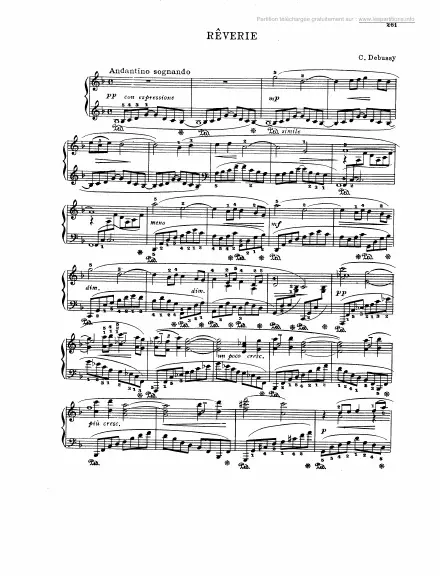
About this work
Rêverie unfolds like a thought that becomes clearer along the way. At first the melody seems to float above a discreet accompaniment, then the harmony changes the colour of what already seemed familiar. Debussy has not yet reached the language of his later works, but his ear for layers of sound is already present: melody, inner voices and bass never breathe in quite the same place.
At the piano, first bring out the upper line without pedal. Then add the other voices while keeping the weight close to the keyboard, especially where the chords become fuller. The pedal must prolong the resonance without erasing harmonic changes; hear it as a moving colour, not a lid placed over the whole bar. The tempo may be flexible, provided the pulse remains perceptible beneath the rubato.
Returns of the theme are not simple copies. Depending on the context, seek a sense of distance, a more veiled tone or a firmer direction. In rising passages, build intensity through the progression of the phrase before increasing the volume. Then let the ending withdraw without slowing every note: the reverie recedes, but does not fall asleep in the middle of a cadence.
What the document containsClaude Debussy's complete Rêverie for solo piano.One 3-page PDF score.No MIDI file is provided.The document covers the complete piano work.