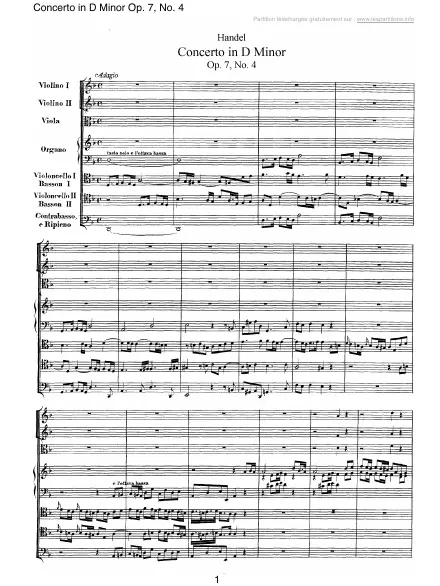
About this work
Handel’s Organ Concerto, Op. 7 No. 4, HWV 309, is built on exchange between soloist and orchestra. The fast movements alternate replies, passagework, and returning tuttis; the Adagio opens a more lyrical space. A passage left ad libitum also reminds us that the performer may participate in the form rather than execute a completely closed text.
In the Allegros, identify the motifs that the organ takes from the orchestra and preserve their articulation. The soloist can stand apart through colour without enlarging every entrance. Practise the basses with the left hand before adding the runs: their harmonic direction sustains the argument when the upper part becomes more brilliant.
The Adagio requires a supported line and a registration that lets ornaments breathe. For the ad libitum passage, prepare a solution proportionate to the movement and based on its motifs and cadences; freedom does not remove the need for a shared grammar. In rehearsal, establish the returns of the tutti clearly so that improvisation rejoins the ensemble without hesitation.
What the document containsthe Organ Concerto, Op. 7 No. 4, HWV 309;an 11-page PDF;no accompanying MIDI file.The score gives the continuity of the movements and marks the passage left ad libitum.