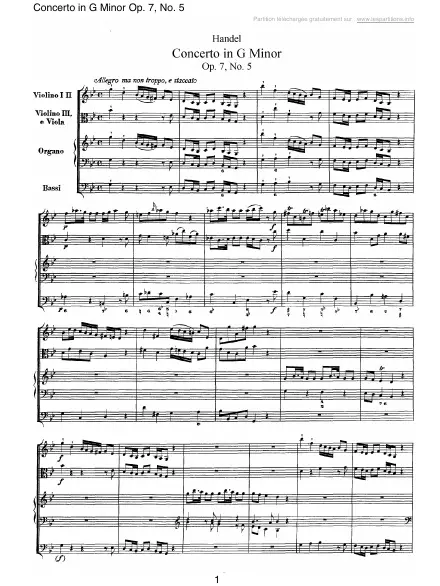
About this work
This organ concerto does more than alternate a soloist with an orchestra waiting politely in the background. Handel brings the organ into the middle of the tutti, then lets it comment on, extend, or redirect their energy. The opening Allegro works best when this exchange remains audible: the full passages need weight, while the solo episodes call for greater mobility.
The Andante is built over an ostinato bass. Keep that tread steady, but listen to everything that changes above it: chordal density, the length of each line, and the colour of dissonances. At the organ, choose sufficiently distinct sound planes to clarify the dialogue without turning every entrance into a new scene. With orchestra, attacks must remain shared, especially when motives circulate quickly.
The minuet and gavotte then shift the centre of gravity towards dance. The pace may brighten, but well-placed accents matter more than speed. Practise each movement separately before joining them, preserving their contrasts: the firmness of the opening, the patience of the ostinato, the minuet’s poise, and the gavotte’s spring.
What the document containsthe concerto for organ and orchestra;a 9-page PDF;no accompanying MIDI file.The file brings the four movements together in a continuous presentation.