Free sheet music
Bassoon Concerto in B-flat major, KV 191
About this work
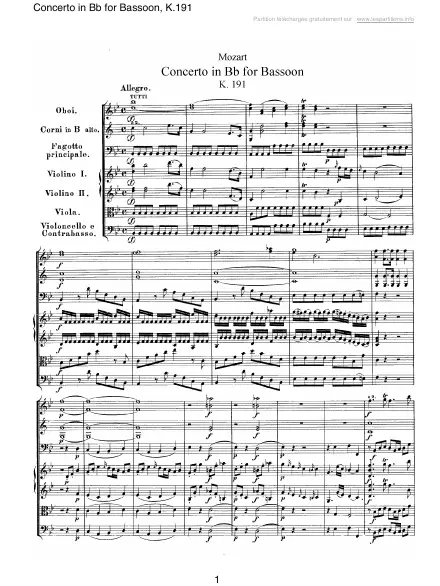
In the Allegro, the bassoon does not appear in the first bar. It first listens to the tutti for thirty-four bars, then enters with a supple phrase before moving into rapid passagework, trills and wide intervals. This alternation between waiting and virtuosity returns throughout the movement: the part requires the player to remain inside the tempo even while the instrument is silent.
The Andante ma Adagio favours a more sustained and ornamented line. Breaths must extend the phrase without breaking its motion. The Rondo, marked Tempo di Menuetto, returns to a dancing three-beat pulse, but its triplets and articulated sequences demand clarity. The three movements therefore require different breath, attack and ways of directing a cadence.
What the bassoon part helps develop
Begin by locating every entry that follows a long orchestral silence. Count the last two bars of the tutti while beating time, then breathe late enough to keep the attack alive. In rapid passages, isolate small groups of notes and maintain the same flow when the line changes register or moves into tenor clef.
Wide intervals are easier when prepared without forcing the sound: check the fingering, hear the destination note, then restore the passage to its phrase. The MIDI presents the bassoon alone and helps locate entries in all three movements. To practise with orchestra or piano, however, this separate part must be supplemented with a suitable accompaniment.
About this edition
Scoring: the document contains the separate bassoon part for all three movements of the concerto. The orchestra does not appear on these six A4 pages.
Files: the PDF includes the Allegro, Andante ma Adagio and Rondo. The MIDI plays the bassoon part alone, preserving the tutti rests and the sequence of the three movements.
Source and rights: the Mutopia edition maintained by Liang Seng is based on a Breitkopf & Härtel edition from the 1880s. Mutopia places this file in the public domain, as is Mozart's work. LesPartitions.info retained the complete separate part, removed the old technical links embedded in the PDF, added the site's link to all six pages, isolated and checked the bassoon part in the three source MIDI files, and wrote this introduction.