About this work
Mozart composed the G-major Concerto K.313 in Mannheim during the winter of 1777-1778 as part of a commission from the amateur flautist Ferdinand Dejean. The New Mozart Edition notes that the order, intended to include several concertos and quartets, was only partly fulfilled. The autograph of K.313 is no longer known, so the modern text depends on secondary sources, including the first printed edition of 1803. That transmission does not obscure how precisely the work is shaped around breath, colour and the flute’s mobility.
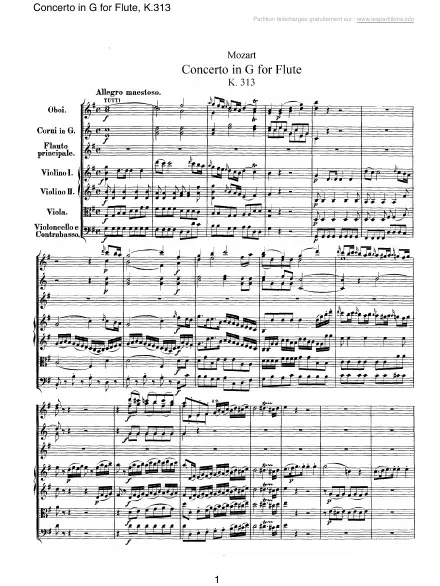
The Allegro maestoso begins with an extended G-major tutti. Two oboes, two horns and strings present chords, trills and scales before the soloist enters. The flute does more than decorate this material: it lightens it, extends it upwards and shifts accents through rapid runs. Orchestral returns provide firm points of reference, while solo episodes alternate long singing lines, semiquavers and silences in which the accompaniment can change colour.
In the Adagio non troppo, two orchestral flutes replace the oboes, the horns change to D and the strings often play con sordino. This veiled frame brings the soloist’s appoggiaturas and breaths into focus. The Rondo, marked Tempo di Menuetto, returns to G major and triple metre. Its refrain retains the poise of a dance, but episodes multiply changes of register, trills and first-violin replies; virtuosity therefore remains contained within a clearly audible form.
When practising the concerto, prepare phrase endings and tutti returns separately: an overlong breath can erase the orchestra’s renewal. In the first movement, runs benefit from being grouped by harmony rather than lined up note by note. The Adagio needs vibrato and ornamentation proportionate to the transparent strings. In the Rondo, retain the minuet’s measure even when the flute accelerates the surface; the dance should remain perceptible beneath the rapid writing.
What the document containsDocument: The document contains 31 pages in PDF format. No MIDI file is currently attached to this historical record. The PDF is a complete 31-page full score: Allegro maestoso, Adagio non troppo and Rondo. Tempo di Menuetto. It scores principal flute, two oboes, two horns and strings; in the Adagio, two orchestral flutes replace the oboes and the strings are marked con sordino.The historical record marks the work and file as public domain but does not document the editor or exact provenance of this copy. The file preserved by LesPartitions.info can be compared with the reference catalogue. Following that check, LesPartitions.info separates established facts from information that remains incomplete.