About this work
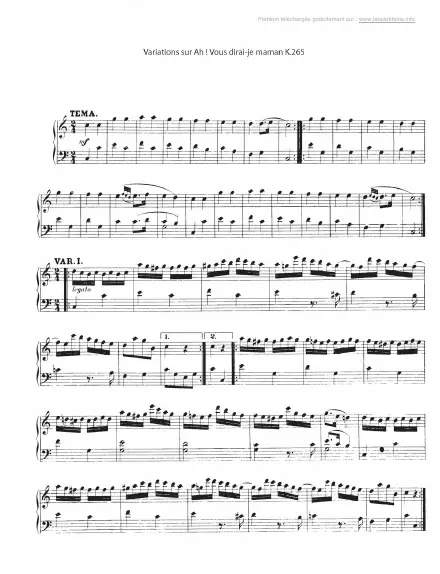
Mozart takes a very simple French melody and subjects it to twelve transformations for keyboard. The theme remains the measure of everything that follows: early variations quicken the flow of notes, while others move the melody between the hands, thicken the polyphony or briefly darken the key. The final pages broaden the tempo before setting the conclusion in motion.
Play the theme first, noting its phrase lengths and cadences. Then ask three questions of every variation: where is the melody, which new rhythm dominates and which voice supplies the pulse? This keeps the set from becoming a series of finger exercises. Practise semiquavers in harmonic groups; in polyphonic passages, sing the voices separately before bringing them together.
The contrasts must belong to the same story. Keep the tempos compatible so that one variation does not sound foreign to the previous one, while giving each its own articulation and colour. The slow variation needs broad breathing without losing count; the lively final return needs prepared energy rather than haste. Reading the set continuously keeps all twelve stages in view.
What the document containsthe theme and all twelve Variations K 265 for solo piano;an 8-leaf score in PDF format;no accompanying MIDI file.The resource presents the complete cycle, from the theme to the twelfth variation.