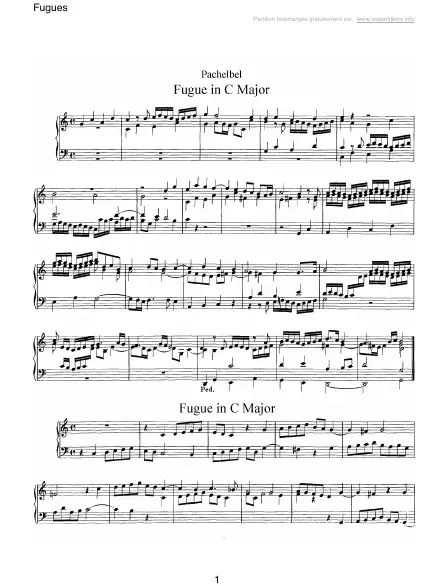
About this work
These nineteen fugues by Pachelbel are short, but they do not tell the same story nineteen times. Some subjects move mainly by step, while others hinge on a leap or a more strongly marked rhythm. The answer may arrive almost immediately, and the close sometimes comes before there is time to establish the large contrapuntal machinery one might expect.
When practising them, first note the shape of the subject and the key of each piece. Play all its entries on their own, then add the countersubjects and the accompanying voices. This prevents the upper voice from being brought out automatically. A clear registration without too much weight in the bass helps reveal the differences in writing from one piece to the next.
The collection also lends itself to work in families: rising subjects, repeated motifs, more lyrical fugues and more tightly woven ones. Linking two contrasting pieces is a useful test of tempo and articulation. Every miniature needs a clean ending; short does not mean rushed.
What the document contains19 fugues for organ in Max Seiffert’s edition;a 20-page PDF;no accompanying MIDI file.The file is a historical public-domain edition, not a recording or a recent critical edition.