About this work
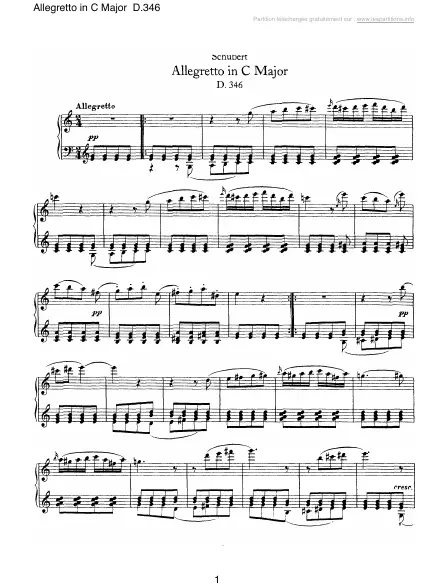
The Allegretto in C major, D.346, moves with the deceptive ease of a walk. Its melody sounds familiar, then Schubert shifts the accents, bends the harmony, and opens more unsettled digressions. The surviving music breaks off, so it should be heard as a fragment rather than being made to suggest a conclusion that is absent from the source.
Begin by letting the upper line sing above a light bass. The repeated accompaniment should provide a step, not weigh down every beat. Then mark each harmonic change and prepare it with a breath or a discreet dynamic turn. The character of the piece lies in these modest deviations, which allow a gracious phrase to pass into a more ambiguous climate.
The fragment has sometimes been proposed as a possible finale for the Sonata D.279, but that connection remains an editorial hypothesis. In practice, there is no need to simulate anything: settle the pulse, direct each reprise, and leave the final interruption open. Such restraint gives the last gesture its genuine tension and makes the unfinished state of the work unmistakable.
What the document containsthe Allegretto in C major, D.346, for piano;an 8-page PDF presenting the surviving fragment;no accompanying MIDI file.The file transmits an old edition of the known music and does not complete the missing bars.