About this work
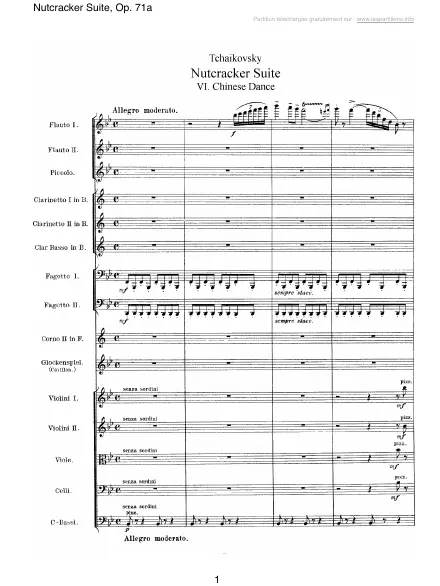
The Chinese Dance from The Nutcracker lasts only a few minutes and works almost like a box of orchestral colours. The bassoons repeat an ostinato figure, the strings answer with short attacks and the flute stands out above them with a highly mobile line. Tchaikovsky does not aim for broad development: the scene comes alive through precise entries and the gap between the slightly comic low register and the brilliant treble.
In rehearsal, begin with the accompaniment. The bassoon motif should retain the same length and weight even when the flute draws all the attention. The string pizzicatos need a clean start, but not an accent on every note. A shared pulse supplies enough spring; if every player underlines a detail, the miniature soon becomes cluttered.
The flute can then practise its runs with the points of arrival in mind rather than speed itself. Listen to the way each flight settles back into the frame established by the orchestra. The character grows from this exact mechanism, with just enough flexibility to prevent the dance from sounding like a precision exercise.
What the document containsthe Chinese Dance, the sixth number in The Nutcracker Suite, Op. 71a;a 6-page orchestral score;no accompanying MIDI file.The PDF presents the orchestration of the number, not a piano reduction.