About this work
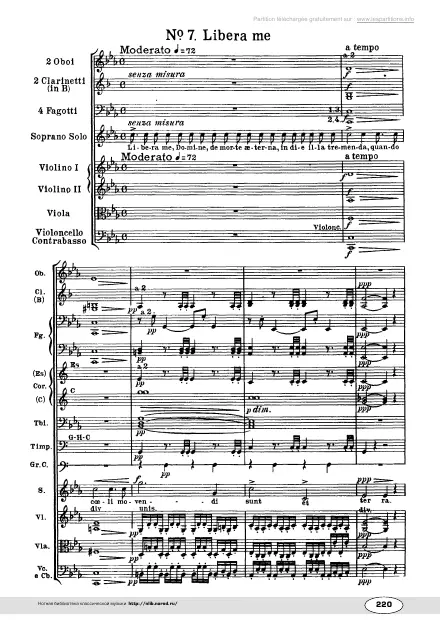
The “Libera me” that closes Verdi’s Requiem begins with the bareness of a soprano prayer. The choir answers, the “Dies irae” returns with orchestral violence, and a fugue then carries the ensemble towards a conclusion that does not resemble a triumph. Fear, collective momentum, and murmuring remain present to the end.
Practise the opening with the exact rhythm of the Latin, almost spoken, before adding vibrato and breadth. The choir must answer with the same quality of diction. When the “Dies irae” returns, its power depends as much on exact attacks and silences as on volume; a saturated sound would instead diminish the contrast.
In the fugue, first establish the subject and its shared consonants, then combine sections two at a time. The orchestra supports the progression without relieving singers of carrying their lines. Keep something in reserve for the final accumulations and prepare the eventual withdrawal. This passage from the collective body to the lone voice gives the movement its unresolved question.
What the document containsthe “Libera me,” the 7th part of the Requiem, for soprano, choir, and orchestra;a 65-page PDF;no accompanying MIDI file.The score presents the complete movement, from its opening prayer to the final fugue.