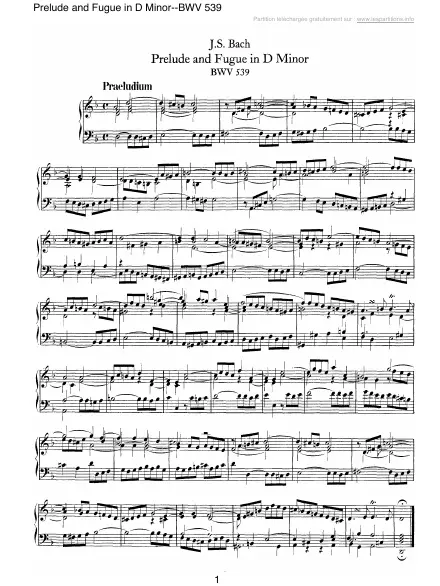
About this work
The Prelude and Fugue in D minor, BWV 539, calls for a cautious note. The fugue reworks music from the second movement of the Sonata for solo violin, BWV 1001, for the organ. The attribution of the work as a whole, and the precise identity of the transcriber, have been debated. The musical link to Bach is certain in the fugue’s source material, but this alone cannot settle the full provenance of the pair.
At the keyboard, first bring out the fugue subject in its bare form. Its repeated notes and changes of direction must remain recognisable at every entry. Although the writing comes from the violin, it should still breathe like a line when distributed among several voices and supported by the pedalboard.
The shorter prelude prepares a different sound world. Avoid inflating it merely to justify the fugue that follows. Clear articulation and a coherent registration are enough. In contrapuntal practice, reduce the accompanying voices without blurring them: the listener should hear a conversation, not just the subject caught in a spotlight.
What the document containsa prelude and fugue for organ under the catalogue number BWV 539;a 6-page PDF;no accompanying MIDI file.The fugue is connected with BWV 1001; the document alone cannot settle questions surrounding the attribution of the transcription or the pair as a whole.