About this work
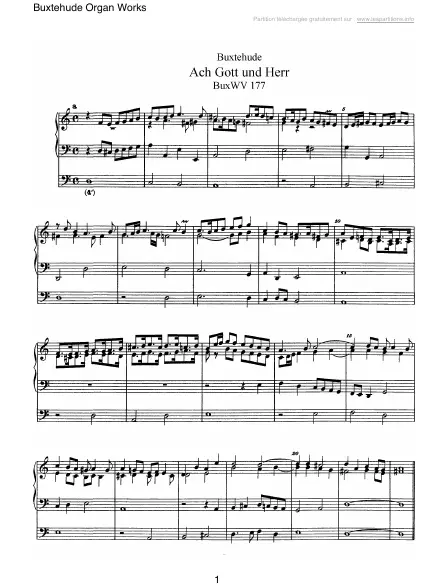
Buxtehude’s chorale preludes give a familiar melody a new setting without making it unrecognisable. In the first twenty-four pieces of this volume, the cantus firmus may be ornamented in the upper voice, set in long notes or surrounded by imitation. Each piece is brief, but balancing liturgical text, melody and counterpoint requires a genuine interpretative decision.
Buxtehude wrote before Bach, within a North German organ tradition in which articulation and the colour of each layer matter as much as harmonic density. To understand a piece, sing the chorale first and locate its phrases. Cadences in the text often explain those in the music; a well-placed breath reveals the form more clearly than changing registration on every line.
Practise the cantus firmus alone with the chosen fingering or pedalling, then add one accompanying voice. The ornamentation must preserve the direction of the melody, not cover it in lace until the furniture disappears. On a reverberant organ, articulate enough to keep the intervals clear and allow silence to complete the cadences.
What the document contains
chorales 1 to 24 from the compilation;
a 60-page PDF for organ;
no separate MIDI file.
Another page continues the collection with the remaining chorales. Note the BuxWV number of the chosen piece before preparing a programme.